Media Literacy Courses
Core Course
Media Literacy and the Psychology of Inquiry
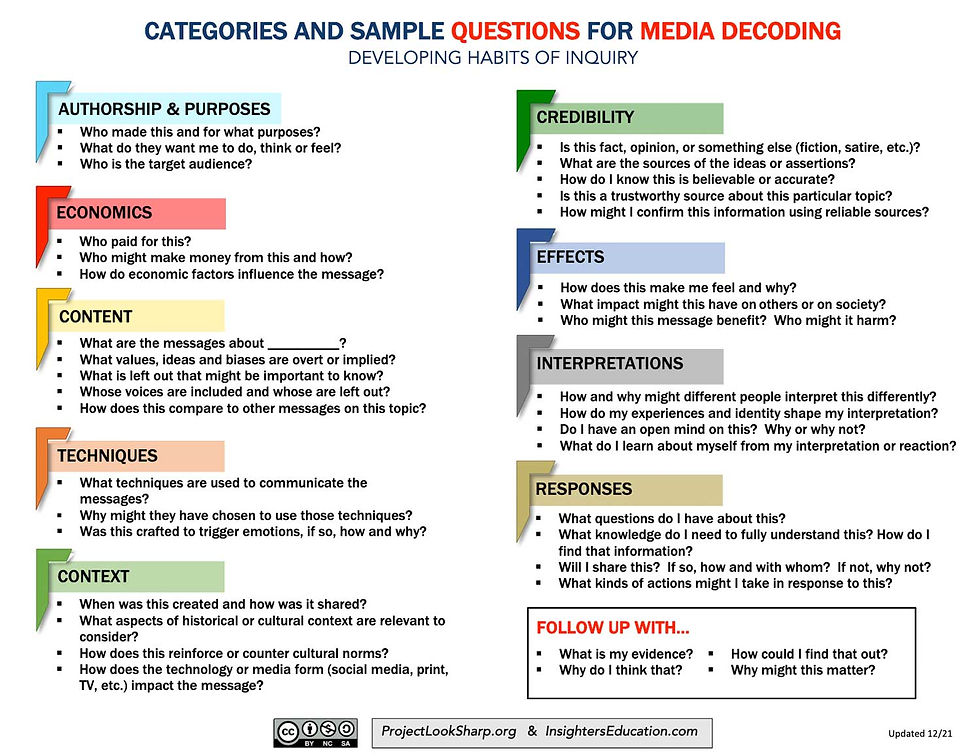
This was the core class where I learned how to "decode" the world around me. Instead of just watching a commercial or reading a post, we practiced breaking them down to see how they were built using specific colors, sounds, and editing tricks to make us feel a certain way. As a Marketing Communications major, taking this class my first year helped me explore critical questions to think about when I create media of my own. In this class we had the ability to create media as part of a PSA project, so my group was able to create promotional material for Make-A-Wish while thinking of our target audience and how we wanted them to perceive it.

Intro to Mass Media
Core Course
This class gave me a "big picture" look at how the media industry works, especially through the Hub Model. We studied how mass communication is like a circular process: it starts with the communicators (the people making the content) and moves through several layers—like codes (how the message is put together), gatekeepers (the editors or bosses who decide what gets published), and filters (our own personal biases)—before it ever reaches the audience.

My website about flute ensembles as my "creative project"
Media Analysis Perspective
Music and the Media
This class looked at how music changes depending on where we hear it, like on the radio, in movies, or on social media. A big highlight for me was studying "recession pop" and artists like Kesha. We analyzed how that "party like there’s no tomorrow" messaging was actually a response to the 2008 financial crisis; since people had no money or job security, the music focused on living in the moment. For my final creative project, I applied these concepts by building a website dedicated to flute ensembles. This project allowed me to explore how digital media formats can curate and preserve niche musical traditions, bridging the gap between historical performance and modern accessibility.
Media Analysis Perspective

Through this class, I analyzed children's books from a different culture (Italy) and compared them to children's media in the United States. We looked at media from the 1800s-present day, focusing on different historical contexts like the post-unification of Italy and how the moral message of the books shift based on the political atmosphere of the country at that time. We also analyzed illustrations, particularly the same image made by different artists in different time periods and how elements vary based on those factors.

An assignment where we practiced "quiet" vs "loud" ads in the same product category (shoes)
Media Literacy Application
Integrated Marketing Communications Lab
This class was the "final test" of everything I learned. I worked in a student-run agency to help a real client, Friends of the Ithaca Farmers Market. Instead of just reading about media, I had to actually apply media literacy by creating a marketing plan that would work in the real world. I spent the semester doing research and interviews to figure out exactly what the community needed and how to communicate with them effectively.

Italian Children's Literature in Translation
3 different illustrations of the same scene from a classic Italian children's book, Cuore.
Media Creation
Advertising, Copywriting, & Art Direction
I learned how to use visual and verbal "codes" to build persuasive messages for different audiences. Through this hands-on experience, I realized that every font choice, color palette, and headline is a calculated decision designed to influence a specific consumer. We would often create 3 or more different concepts for an ad, and share them with the class. Critiquing my peers’ work further sharpened my ability to evaluate the ethics and effectiveness of an ad, ensuring that I wasn't just creating media, but doing so with a deep understanding of its power to shape public perception.
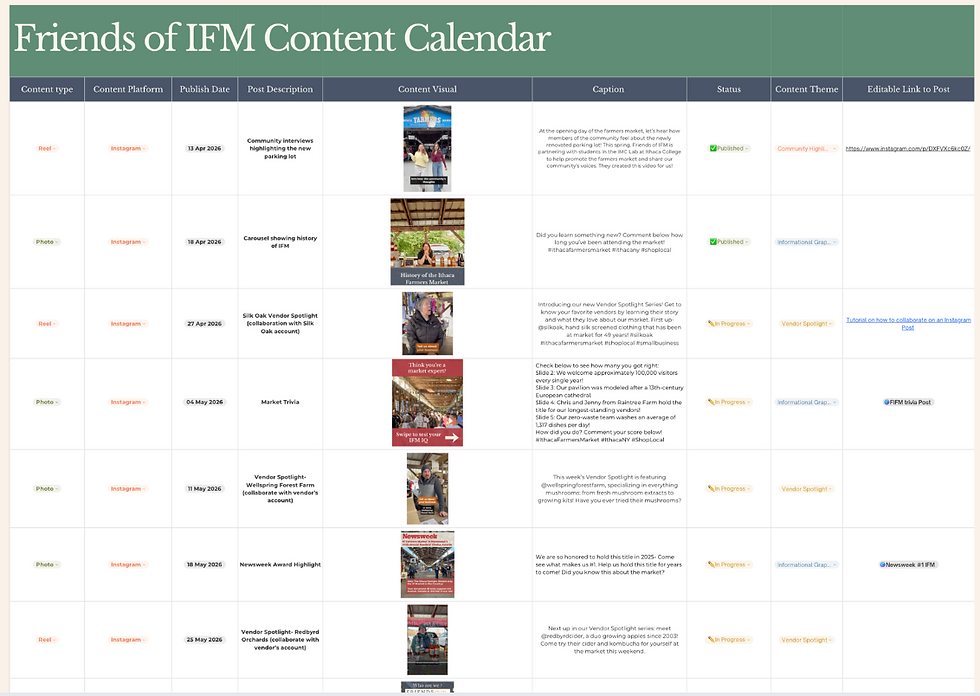
A content calendar we created for the client of both video and carousel content for Instagram along with captions.